
Save $-5.99
Low stock
Second grade is when reading stops being the lesson and becomes the tool. The workbooks on this shelf are the floor: math, reading, writing, spelling, science, social studies. The series are the ceiling, and the ceiling is where the year is won. A second grader who reads forty Boxcar Children and Magic Tree House books has done more than second grade.
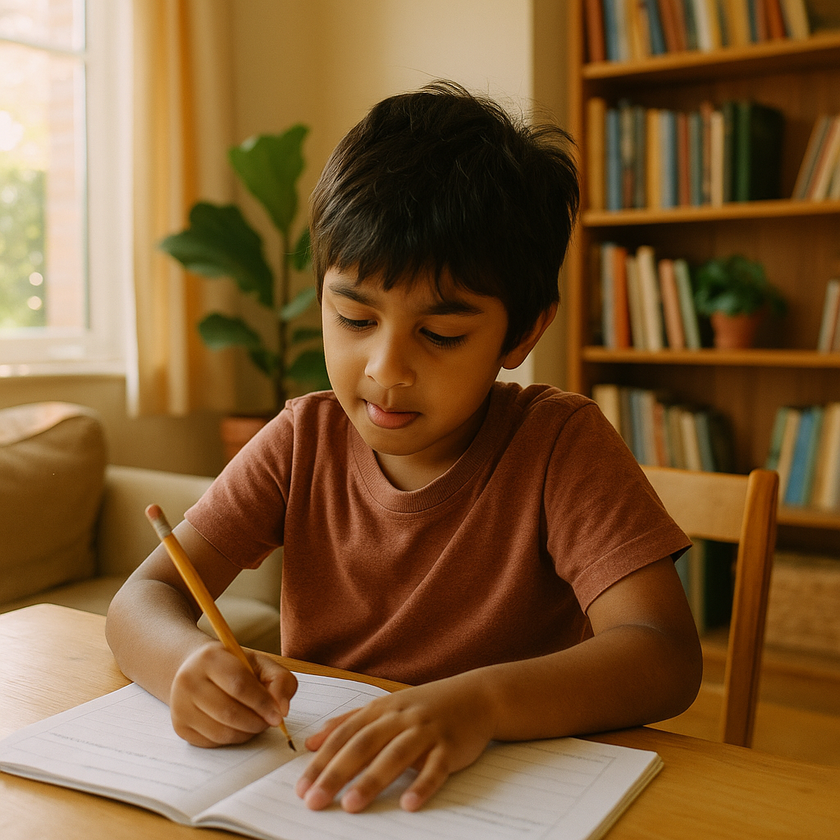
How to use it: twenty minutes of math, twenty of reading and writing, science or social studies twice a week. Then a chapter book, read alone, told back to you at lunch. That telling back is narration, and it is the whole of second-grade language arts if you let it be.
The whole year in one place: The Whole Year: 2nd Grade.
Why it works: Red-Eyed Tree Frog follows one frog through a single night in a Central American rainforest as it searches for food and avoids predators. The photographic sequence turns nocturnal movement, feeding, camouflage, and predator-prey risk into a compact survival narrative.
Why it works: The Shortest Day pairs lyrical prose and cozy illustrations with the long human wait for daylight to stop shrinking at the winter solstice. Earth's tilt explains the seasonal turning point, while celebrations across cultures show how people made meaning from the recurring sky pattern.
Why it works: A Log's Life tells the afterlife of a fallen oak as a continuing forest story rather than presenting a list of decomposition facts. Plants, fungi, and animals successively use the log for food and shelter, so ecosystem relationships carry the book from one stage to the next.
Why it works: Corn Is Maize tells how Native American farmers nurtured a wild grass into a crop that could be grown, stored, prepared, and shared. The transformation of one plant across generations gives botany and agricultural knowledge a human history rather than presenting corn as a static fact page.


