

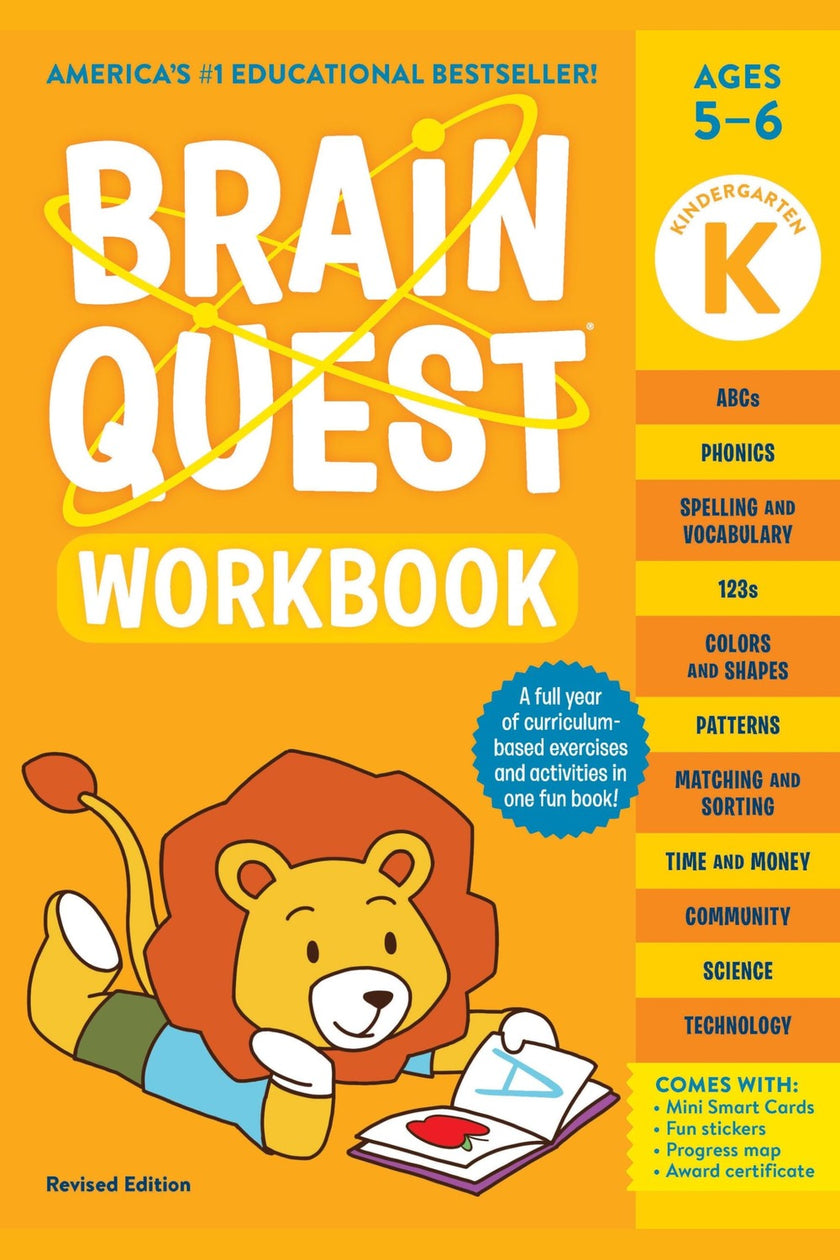
The Whole Year: Kindergarten
Kindergarten, the whole year, on one shelf. Kindergarten is one workbook per subject, twenty minutes a day, and a lap full of books. That is the whole plan. The math and reading workbooks on this shelf are the floor; the read-alouds are the ceiling, and the ceiling matters more this year. About two hundred dollars for the workbooks and the books, and you own every page.
How to use it: Ten minutes of math, ten of letters and sounds, one science or geography page a couple of times a week, then read aloud until they wander off. Mercy Watson and My Father's Dragon are the first chapter books most five-year-olds sit through; The Boxcar Children and Charlotte's Web are for the spring, when they can. Steve Jenkins' animal books are the science, and nobody will call it that.
Two more things: the custom full grade is where we build this same year around your actual child instead of a grade level, and the $49 map is the first step of that. Not sure this is the right shelf? Five questions will tell you.
Shop our The Whole Year: Kindergarten products below
What Do You Do with a Tail Like This?: A Caldecott Honor Award Winner
- Life Science
- Story / Adventure
Why it works: Cut-paper close-ups ask readers to identify which animal owns an unusual nose, ear, eye, mouth, foot, or tail before the page reveals its function. The visual mystery turns comparative anatomy into a repeated guess-and-check game across many animal groups.
Custom Full Grade — All 4 Core Subjects (per 12-week term)
Over and Under the Snow
- Life Science
- Environment & Ecology
- Lyrical / Visual Picture Book
Why it works: Over and Under the Snow follows a cross-country ski trip while cutaway pictures expose the hidden animal world beneath the snowpack. The contrast between the quiet trail and active subnivean habitat makes winter shelter, movement, and survival unfold as discoveries under the travelers' feet.
Actual Size
- Life Science
- Story / Adventure
Why it works: Actual Size places full-size animal structures directly on the page so a child encounters scale with eyes and hands before reading the measurements. The visual comparisons turn anatomy and quantitative size into a guessing-and-checking experience rather than a reference table.