
Save $-13.99
Low stock
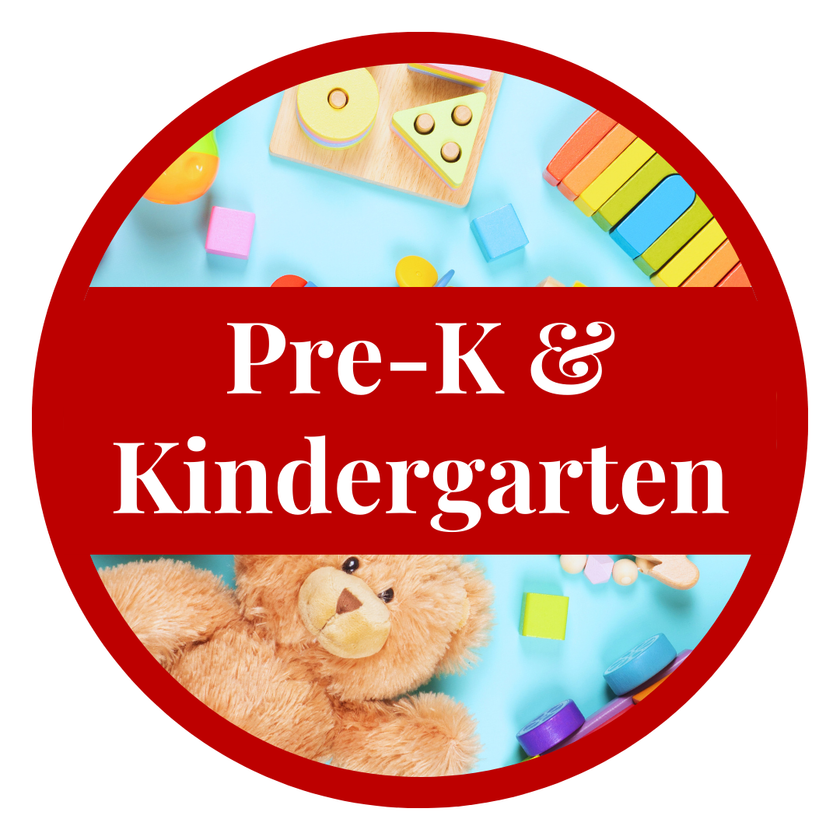
Preschool and kindergarten, all in one place. The honest version of these years: read aloud constantly, count real things, play games, and do about twenty minutes of something formal once your child is up for it. That is not a lowered bar. It is what the research and every experienced teacher will tell you, and it is why this shelf is mostly books and games.
How to use it: follow the child's stamina, not a schedule. Some five-year-olds will do a workbook page happily; some will not for another year, and both turn out fine. What matters at this age is that books are a pleasure and that nobody learns to dread the table.
The whole year in one place: The Whole Year: Kindergarten.
Why it works: Each spread poses an urgent predator problem before revealing the structure or behavior a particular animal uses to escape. The repeated danger-and-solution rhythm makes defense adaptations feel like surprising answers rather than entries in a zoology reference.
Why it works: Actual Size places full-size animal structures directly on the page so a child encounters scale with eyes and hands before reading the measurements. The visual comparisons turn anatomy and quantitative size into a guessing-and-checking experience rather than a reference table.
Why it works: How to Clean a Hippopotamus presents animal partnerships as close-up, step-by-step encounters, from a mongoose answering a warthog's signal to ravens following wolves. The playful instruction frame makes readers work out what each partner does and what either animal gains.
Why it works: A wordless sequence zooms from Earth in space through continents, a coast, a town, a yard, and finally a ladybug beneath a magnifying glass. The nested visual journey makes scale and point of view something children infer from page turns instead of a lesson about measurement.


