The math makes sense—until it’s a word problem
Six useful resources. A first step for each.
Your child can work out 8 + 5, then freeze when those numbers arrive inside a paragraph. Before adding more practice, find where the problem becomes difficult: reading the words, picturing what happens, choosing a relationship, doing the calculation, or explaining the answer.
Start with something your child cares about: recipes, animals, a game, a collection, building something. Keep the mathematical relationship while choosing a familiar setting. You do not need all six resources below. Pick the one that fits the snag.
Try this with one problem today
Read it aloud if decoding the text is getting in the way of this math lesson. Ask your child to tell you what is happening without calculating yet. Then ask what the question wants them to find. They can show the situation with objects, a sketch or a sentence before choosing an equation.
For example: A tray has 8 rolls. Someone adds 5 more. How many rolls are on the tray now? Move 8 counters onto a drawn tray, then add 5. Ask your child to connect the action to 8 + 5 = 13 and explain what the 13 counts. Change the numbers when this is comfortable. If the calculation itself needs teaching, work on that too.
1. The story gets lost in the numbers

Resource: Numberless Word Problems
Try today: Temporarily replace quantities with words. “A tray has some rolls. Someone adds more.” Ask what changed and what you could find out. Restore one quantity at a time, then the question. Let your child explain how each new detail changes the picture.
Access and fit: Free public explanations and problem-bank links, including elementary problem types. An adult needs to prepare and lead the discussion. The linked Google slide files may require an account to make your own copy. Use the resources at their original site rather than republishing their decks.
Paper option: Cover the numbers in a problem you already own, or write your own short story in stages. Keep the relationships intact as you reveal information.
2. A math word makes no sense

Resource: The Math Learning Center’s Math Vocabulary Cards
Try today: Find the unfamiliar term in the problem. View its picture and definition, then have your child make a small example with objects or a drawing. For “equal groups,” make three groups of four counters and check what is equal about them. Return to the original sentence.
Access and fit: Free browser app with elementary vocabulary, written definitions and visual models in English and Spanish. The publisher offers K–2 and 3–5 card sets. It is a vocabulary support, not a complete word-problem lesson. No paid Bridges curriculum purchase is needed to use the free apps.
Paper option: Make a card with the term, your child’s example and an explanation they understand. Learn the meaning; avoid treating a single word as an instruction to add or subtract.
3. The quantities need a picture
Resource: The Math Learning Center’s Number Frames
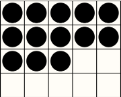
Try today: Model the roll problem above. Place 8 counters in a double ten-frame, then add 5 in a second color. Ask your child to show the starting amount, the added amount and the total. Connect the model to an equation after the story is clear.
Access and fit: Free browser app with standard and custom frames. The publisher describes counting, comparing and computing with counters. It is an open workspace: a parent and child decide what to represent and check. It does not automatically turn a paragraph into the correct model.
Paper option: Draw two ten-frames (each with two rows of five boxes) and use buttons, beans or pencil dots. For larger quantities, choose a sketch or other model that avoids counting hundreds of objects individually.
4. “More than” keeps getting reversed

Resource: MathsBot’s Bar Modelling tool
Try today: One jar holds 12 beads. It holds 5 more than another jar. How many beads are in the other jar? Draw aligned bars for both jars: the longer bar is 12, and its extra piece is 5. Label the shorter bar with a question mark. The unknown is 7; check that 7 + 5 makes 12. “More” appears in the story, but adding 12 and 5 would answer a different question.
Access and fit: The public browser tool is available without a login and includes advertising. Its CPD video library requires membership. A larger screen may be easier for placing and labelling bars; choose paper if arranging bars on your device gets in the way.
Paper option: Draw the two bars with a pencil. Ask your child which quantity each part represents.
5. A new problem needs a plan

Resource: NRICH’s Money Bags challenge
Try today: Open the challenge together. Let your child use counters and four drawn bags to investigate the possible totals. Record which amounts a proposed arrangement can make, and revise it when an amount is missing. Ask how they know their final arrangement covers every required amount.
Access and fit: Free public problem, starting hints and solution discussions. NRICH lists ages 5–11, but choose by readiness; it is a reasoning challenge, not an introductory worksheet. The site uses UK pence: 1p means one penny. Identical counters can stand for pennies. Keep the solutions covered until your child has tried an idea.
Paper option: Four circles and 15 counters are enough. An adult can check the final arrangement of 1, 2, 4 and 8 by testing every total from 1 through 15.
6. An older child needs an equation
Resource: OpenStax Prealgebra 2e, section 9.1
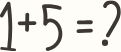
Try today: A club rents a table for $6 and pays $2 per participant. The total is $20. How many participants are there? Ask your child to name the unknown: let n be the number of participants. Write 6 + 2n = 20. Then solve n = 7 and check: $6 + $14 = $20. The answer is 7 participants, with the unit stated.
Access and fit: Free, openly readable online chapter with worked examples. It assumes basic equation-solving and suits a child ready for prealgebra. Optional accounts and other OpenStax products are not needed to read this chapter.
Paper option: Draw the fixed $6 cost separately from the equal $2 amounts. Your child can use that picture to explain the equation.
What to notice next
Ask your child to explain one choice: why that model, why that equation, or why the answer makes sense in the story. If the difficulty returns at the same step, that tells you what to teach next. You can demonstrate a similar example and then let your child try a fresh one with less help.
What does your child enjoy figuring out, and which part of a word problem gets in the way?
Resources and access checked November 16, 2026. Features can change. These supports serve different purposes; choose by the skill your child needs to practise. All paper activities can be tried without buying anything.
Why these supports
The What Works Clearinghouse practice guide recommends teaching mathematical language, using well-chosen representations and deliberately teaching word problems. That supports this guide’s emphasis on understanding and modelling. It does not establish that this particular collection of websites has been tested as a program.